Chemical & Hazardous Waste Disposal for Sydney Businesses
Licensed collection and disposal of oils, greases, solvents, paints, resins, sludges, coolants, detergents and adhesives — every regulated chemical and hazardous waste stream your site generates, correctly classified, transported and treated under NSW EPA licence, with full documentation.
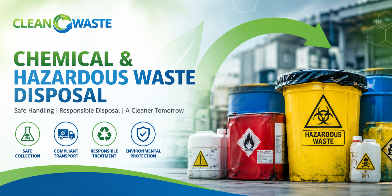
Licensed collection and disposal of chemical and hazardous waste streams from Sydney businesses
What Is Chemical & Hazardous Waste?
Chemical and hazardous waste covers the full range of regulated liquid and semi-liquid by-products a business can generate — oils and greases from kitchens and workshops, solvents and adhesives from manufacturing, paints, inks and dyes from finishing processes, resins and latex from production lines, sludges and slurries from tanks and treatment systems, coolants from machinery, and detergents from cleaning operations. Under NSW EPA rules, most of these streams are classified as hazardous or regulated waste, meaning they can't go into general waste bins or down a drain and need to be handled by a specifically licensed operator.
Clean Waste manages all nine of these streams under one account — so instead of juggling separate providers for oil, solvents, paint and sludge, you get one point of contact, one invoice, and consistent documentation across every regulated waste stream your site produces.
Keep Every Stream Separate and Correctly Labelled
Combining incompatible chemical and hazardous waste streams — even accidentally — can create toxic gases, fires or violent reactions.
Never combine streams to save space or time
Oils, solvents, paints, resins, sludges, coolants, detergents and adhesives should each be stored in their own labelled containers and never tipped together into a single drum. Some combinations — solvents with oxidising cleaning agents, for example — can react dangerously. If a container is unlabelled or you're unsure what a waste stream contains, treat it as hazardous and have it professionally identified rather than guessing at disposal.
Chemical & Hazardous Waste Managed as One Programme
A multi-stream site only stays compliant if every waste type is classified and tracked consistently.
From Classification to Disposal Certificate
Here's what happens when you book a chemical and hazardous waste service.
Free Site Assessment
We map every waste stream on site — oils, solvents, paints, sludges and more — and classify each one.
Booking & Packaging
Collections are scheduled per stream, with correct packaging and segregation confirmed for each type.
Sorting by Waste Type
Each stream is kept separate and routed to its correct treatment pathway.
Licensed Transport
Waste is transported under specialist EPA licence to the appropriate approved treatment or disposal facility.
Certificate Issued
A consignment note and disposal certificate are provided per stream, confirming compliant disposal.
The Nine Streams We Manage
Every business generates a different mix of these — here's what each stream typically looks like.
What Can & Can't Be Collected
Correct sorting and storage keeps your collection safe, efficient and compliant with NSW EPA requirements.
✅ Accepted
- Used oils, greases and fats from kitchens, workshops and machinery
- Solvents, degreasers and cleaning chemicals
- Expired or surplus paints, inks and dyes
- Resins, latex compounds and curing agents
- Sludge, slurries and tank residues from industrial or treatment processes
- Coolants, detergents, adhesives and glues past their useful life
❌ Not Accepted
- Explosive or highly reactive materials without prior arrangement
- Radioactive materials
- Asbestos-contaminated materials (specialist handling required)
- Different waste streams mixed together in a single unlabelled container
- Medical, clinical or biological waste
- General waste or construction debris mixed in
What Happens to Chemical & Hazardous Waste After Collection
Understanding where each stream goes explains why classification and segregation matter so much.
- Identification & classification: Every stream is tested and classified before handling, including unlabelled containers
- Segregation: Compatible waste types are consolidated; incompatible types kept strictly apart
- Consignment authorisation: Movements are tracked via consignment notes from collection to destination
- Treatment or recycling: Oils and coolants may be reprocessed; other streams are neutralised, treated or incinerated depending on classification
- Record keeping: Certificates and consignment records are retained to support audits and regulatory reviews
What Drives Your Chemical & Hazardous Waste Cost
Clear quotes based on stream type and volume, no hidden fees.
Typical cost for a single-stream collection from a small site — a drum of oil, solvent or paint waste.
Typical cost for a multi-stream collection from a workshop or small industrial site.
Bulk industrial volumes, sludge and slurry tanker jobs, or ongoing multi-site programmes are quoted individually.
Pricing depends on stream type, classification, volume and access. Request a free, itemised quote and we'll confirm your exact cost after a no-obligation site assessment.
Chemical & Hazardous Waste for Every Sector
Any business generating one or more of these streams benefits from a single, correctly classified disposal programme.
Chemical & Hazardous Waste Across Greater Sydney
Consistent, licensed collection wherever your site or facility is located.
Dedicated Pages for Specific Streams
Some of these waste streams have their own dedicated service page with more detail — explore the one that matches your need.
Guides on Chemical & Hazardous Waste Compliance
Background reading on how these streams fit into NSW's hazardous and liquid waste rules.
Visit the Clean Waste blog for more guides on NSW waste compliance.
Chemical & Hazardous Waste FAQs
Straight answers to the questions Sydney businesses ask most before booking a chemical and hazardous waste service.
What waste streams does this service cover?
Oil, grease, solvents, paints, inks and dyes, resins and latex, sludge and slurries, coolants, detergents, and adhesives and glues are all managed under this service, alongside our dedicated chemical, lab chemical and liquid waste pages for more detail on specific streams.
Can these waste streams go into general waste bins or down a drain?
No. Most of these streams are classified as hazardous or regulated waste under NSW EPA rules and must be collected, transported and disposed of by a specifically licensed operator.
Can I book collection for multiple streams at once?
Yes. Most sites generate more than one of these waste types, and we can schedule collection across all of them under a single account, invoice and consignment record.
What if I have unlabelled or unknown chemical waste?
Treat unlabelled containers as hazardous until confirmed otherwise. Our team can assess and identify unknown waste as part of a site assessment, so it can be classified and disposed of correctly.
Do you offer scheduled or recurring collections?
Yes, sites with ongoing waste generation — commercial kitchens, workshops, manufacturing lines — can set up a recurring collection schedule across their relevant streams instead of booking each load individually.
How much does chemical and hazardous waste disposal cost in Sydney?
Typical costs range from $60–$180 for a single-stream collection from a small site, and $250–$800 for a multi-stream collection from a workshop or small industrial site. Bulk volumes and ongoing programmes are quoted individually. Contact us for a free, itemised quote.
Book Chemical & Hazardous Waste Disposal Today
Free site assessment. Correct classification. Fully documented, every stream.