Lab Chemical Disposal for Sydney Schools, Universities & Research Facilities
Licensed identification, segregation and disposal of laboratory chemicals — expired reagents, unknown or unlabelled bottles, peroxide-forming compounds and full lab decommissioning clear-outs — correctly classified and transported under NSW EPA licence, with full documentation.
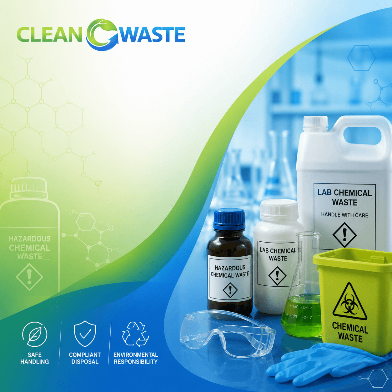
Licensed identification, segregation and disposal of lab chemicals from Sydney facilities
What Is Lab Chemical Disposal?
Lab chemical disposal is the licensed identification, segregation and disposal of laboratory chemicals — expired reagents, discontinued test kits, unlabelled or unknown bottles, and chemicals left behind after a lab move, retirement or closure. Laboratory chemical stock often includes small quantities of many different substances, some of which may be reactive, flammable, oxidising, water-reactive or peroxide-forming, so a proper lab clear-out needs careful identification and segregation by hazard class, not a single bulk collection.
Clean Waste manages lab chemical disposal of any volume across Sydney — from a single shelf of expired reagents to a full lab decommissioning — alongside your other chemical and hazardous waste streams under one account, with a free site assessment to correctly identify, classify and scope the job.
Never Guess at an Unlabelled Lab Chemical
Aged or unlabelled lab chemicals can be more hazardous than they look, including some that become unstable over time.
Treat old, unlabelled or crystallised bottles as high risk
Some common lab chemicals, such as old ether and other peroxide-forming compounds, become increasingly unstable and shock-sensitive with age, especially if crystallisation is visible around the cap. Never open, move or attempt to identify a crystallised, unlabelled or long-forgotten bottle yourself — isolate the area, avoid vibration, and have it assessed by a professional before it's handled or transported.
Lab Chemical Disposal That's Actually Compliant
A lab clear-out only counts as compliant if every chemical is correctly identified and segregated by hazard class.
From Chemical Inventory to Disposal Certificate
Here's what happens when you book a lab chemical disposal service.
Free Site Assessment
Our team walks the lab, cataloguing every container and flagging any high-risk or unstable chemicals.
Identification & Inventory
Unlabelled or unknown chemicals are identified and a full inventory list is compiled before packing.
Segregation by Hazard Class
Flammables, oxidisers, corrosives, water-reactives and peroxide-formers are packed separately by compatibility group.
Licensed Transport
Lab chemicals are transported under specialist dangerous goods licence to an approved treatment facility.
Certificate Issued
A consignment note, chemical inventory record and disposal certificate are provided for your compliance records.
Lab Chemical Waste We Handle
Most school, university and research lab chemical waste falls into one of these categories.
What Can & Can't Be Collected
Correct identification and segregation keeps your lab clear-out safe, efficient and compliant with NSW EPA requirements.
✅ Accepted
- Expired or surplus laboratory reagents and indicators
- Unlabelled or unidentified chemicals (identified by our team)
- Acids, alkalis, solvents and oxidising agents
- Aged ethers and other peroxide-forming compounds
- Discontinued test kits and school science chemical stock
- Full chemical store clear-outs from lab closures or relocations
❌ Not Accepted
- Crystallised, visibly unstable or shock-sensitive containers without prior arrangement
- Radioactive materials
- Biological, microbiological or pathology waste (handled under a separate service)
- Compressed gas cylinders (booked as a separate gas canister service)
- Chemicals mixed together in a single unlabelled container
- General waste or non-laboratory items mixed in
What Happens to Lab Chemicals After Collection
Understanding where lab chemicals go explains why careful identification and segregation matter so much.
- Identification & cataloguing: Every container is identified and logged against a chemical inventory list
- Segregation: Compatible chemical groups are consolidated; incompatible and reactive groups kept strictly apart
- Consignment authorisation: Movements are tracked via consignment notes from collection to destination
- Treatment or neutralisation: Chemicals are neutralised, treated or incinerated depending on classification
- Record keeping: Inventory lists, certificates and consignment records are retained to support audits and reviews
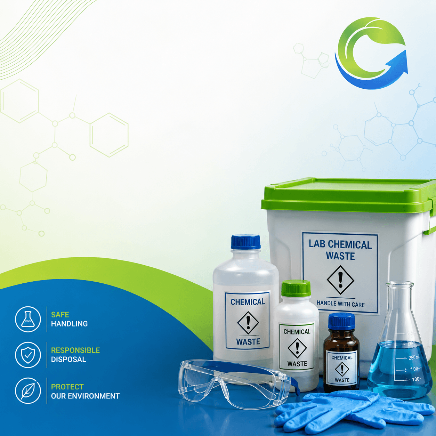
What Drives Your Lab Chemical Disposal Cost
Clear quotes based on chemical identification, volume and hazard class, no hidden fees.
Typical cost for a small shelf or cupboard clear-out of expired reagents.
Typical cost for a classroom or single-lab chemical store clear-out, including unlabelled bottles.
Full department or building lab decommissioning is assessed and quoted individually.
Pricing depends on the number and type of chemicals, identification complexity and volume. Request a free, itemised quote and we'll confirm your exact cost after a no-obligation site assessment.
Lab Chemical Disposal for Every Facility Type
Any facility with a chemical store benefits from a licensed, correctly classified disposal service.
Lab Chemical Disposal Across Greater Sydney
Consistent, licensed collection wherever your school, university or laboratory is located.
Other Hazardous & Laboratory Waste Services You May Need
Lab clear-outs often involve other regulated streams — explore the related service that matches your facility.
Guides on Chemical & Hazardous Waste Compliance
Background reading on how lab chemical disposal fits into NSW's hazardous waste rules.
Visit the Clean Waste blog for more guides on NSW waste compliance.
Lab Chemical Disposal FAQs
Straight answers to the questions schools, universities and labs ask most before booking a chemical disposal service.
What counts as lab chemical waste?
Expired or surplus reagents, discontinued test kits, unlabelled or unknown bottles, and chemical stock left behind after a lab move, retirement or closure all fall under lab chemical waste.
Can lab chemicals go in general waste bins?
No. Laboratory chemicals are generally classified as hazardous or regulated waste under NSW EPA rules and must be collected, identified and disposed of by a specifically licensed operator.
What if we have old, unlabelled or crystallised bottles?
Treat old, unlabelled or crystallised containers as high risk and avoid moving or opening them. Our team can assess and safely handle unstable or unidentified chemicals as part of a site assessment.
Do you provide a chemical inventory list?
Yes. Every job includes a chemical inventory list documenting what was identified and collected, alongside consignment notes and a disposal certificate for your records.
Do you handle small quantities, like a single shelf clear-out?
Yes, from a single shelf or cupboard of expired reagents to a full lab or building decommissioning. A free site assessment scopes the job at any volume.
How much does lab chemical disposal cost in Sydney?
Typical costs range from $70–$180 for a small shelf clear-out, and $250–$700 for a classroom or single-lab chemical store. Full department or building decommissioning is quoted individually. Contact us for a free, itemised quote.
Book Lab Chemical Disposal Today
Free site assessment. Correct identification. Fully documented, every collection.