Contaminated Soil Disposal for Sydney Sites
Licensed excavation, removal and disposal of contaminated soil from construction, demolition and remediation sites — correctly classified against NSW EPA waste guidelines, transported to an approved facility, with full validation and consignment documentation.
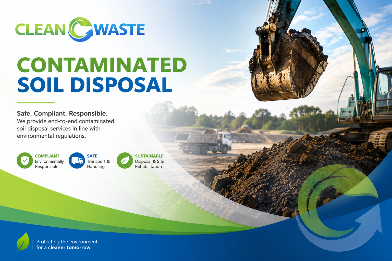
Licensed excavation, removal and disposal of contaminated soil from Sydney sites
What Is Contaminated Soil Disposal?
Contaminated soil disposal is the licensed excavation, transport and disposal of soil affected by hydrocarbons, heavy metals, asbestos fibres, chemical spills or other contaminants above NSW EPA guideline thresholds. Contaminated soil can't be reused on site, sold as fill or sent to a standard landfill without testing and classification — it must be assessed, classified under the relevant waste guidelines, and disposed of by an operator licensed to transport and treat regulated waste soil.
Clean Waste manages contaminated soil removal of any volume across Sydney — from a small remediated garden bed to a full construction site excavation — alongside your other hazardous and liquid waste streams under one account, with a free site assessment to correctly classify and scope the job.
Never Move or Reuse Suspect Soil Without Testing
Moving, spreading or reusing contaminated soil without classification can breach NSW EPA regulations and create liability for the site owner.
Get soil tested before it leaves the site
Soil affected by a known spill, former industrial use, or an unusual odour, colour or debris should be treated as suspect and tested before excavation or removal. Never spread, stockpile off-site or reuse suspect soil as clean fill without validation — untested soil leaving a site can expose the site owner and contractor to compliance and environmental liability.
Contaminated Soil Disposal That's Actually Compliant
A soil removal job only counts as compliant if it's classified correctly and handled by a specifically licensed operator.
From Site Assessment to Disposal Certificate
Here's what happens when you book a contaminated soil disposal service.
Free Site Assessment
We inspect the site, review history and take samples to identify suspected contaminants.
Laboratory Testing
Soil samples are tested and classified against NSW EPA waste classification guidelines.
Excavation & Stockpiling
Contaminated soil is excavated and safely stockpiled or bagged, kept separate from clean fill.
Licensed Transport
Classified soil is transported under waste transport licence to an EPA-approved receival facility.
Certificate Issued
A consignment note and disposal certificate are provided confirming compliant disposal, for your records.
Contaminated Soil Types We Handle
Most commercial and construction-site contaminated soil falls into one of these categories.
What Can & Can't Be Collected
Correct classification and segregation keeps your soil removal safe, efficient and compliant with NSW EPA requirements.
✅ Accepted
- Hydrocarbon-affected soil from spills or leaking tanks
- Heavy metal contaminated soil from industrial or agricultural sites
- Asbestos-impacted soil (assessed and handled to specification)
- Chemical spill-affected soil, tested and classified
- Excavated fill from demolition and remediation projects
- Suspect or unclassified soil (sampled and classified by our team)
❌ Not Accepted
- Untested soil claimed as clean fill without validation
- Radioactive-contaminated material
- Soil mixed with general construction or demolition debris
- Liquid waste or free liquids mixed into soil
- Medical, clinical or biological waste
- Soil from a site without prior assessment or documentation
What Happens to Contaminated Soil After Removal
Understanding where contaminated soil goes explains why classification and sampling matter so much.
- Sampling & classification: Soil is tested and classified against NSW EPA waste guidelines before it leaves site
- Segregation: Contaminated soil is kept separate from clean fill and general waste during excavation
- Consignment authorisation: Movements are tracked via consignment notes from collection to destination
- Treatment or landfill receival: Soil is treated, bioremediated or received at a facility licensed for its classification
- Record keeping: Validation reports and consignment records are retained to support audits and regulatory reviews
What Drives Your Contaminated Soil Disposal Cost
Clear quotes based on classification and volume, no hidden fees.
Typical cost per tonne for testing, classification and disposal of a small remediation job.
Typical cost per tonne for hydrocarbon, heavy metal or asbestos-impacted soil requiring specialist handling.
Full construction site excavations and bulk truckload jobs are quoted individually after assessment.
Pricing depends on contaminant type, classification, volume and site access. Request a free, itemised quote and we'll confirm your exact cost after a no-obligation site assessment.
Contaminated Soil Disposal for Every Sector
Any project uncovering contaminated soil benefits from a licensed, correctly classified disposal service.
Contaminated Soil Disposal Across Greater Sydney
Consistent, licensed removal wherever your site or development is located.
Other Hazardous & Site Waste Services You May Need
Contaminated soil often comes alongside other regulated streams — explore the related service that matches your site.
Guides on Contaminated Land & Hazardous Waste Compliance
Background reading on how contaminated soil disposal fits into NSW's hazardous and site remediation rules.
Visit the Clean Waste blog for more guides on NSW waste compliance.
Contaminated Soil Disposal FAQs
Straight answers to the questions Sydney site owners and contractors ask most before booking a soil disposal service.
What counts as contaminated soil?
Soil affected by hydrocarbons, heavy metals, asbestos fibres, chemical spills or other contaminants above NSW EPA guideline thresholds is considered contaminated and must be classified before removal or reuse.
Can I reuse contaminated soil on site or send it to general landfill?
No. Contaminated soil generally cannot be reused as clean fill or sent to a standard landfill without testing, since it's classified as regulated waste and must be handled by a specifically licensed operator.
What if I'm not sure whether soil is contaminated?
Treat suspect soil — from a known spill, former industrial use, or unusual odour, colour or debris — as potentially contaminated until tested. Our team can sample and classify soil as part of a site assessment.
Do you handle asbestos-impacted soil?
Yes, asbestos-impacted soil is assessed and handled to the relevant specification alongside our asbestos removal service, with correct packaging, transport and disposal documentation.
Do you handle small quantities, like a residential garden bed?
Yes, from a few bags of remediated garden soil to a full construction site excavation. A free site assessment scopes the job at any volume.
How much does contaminated soil disposal cost in Sydney?
Typical costs range from $120–$300 per tonne for standard classification and disposal, and $300–$700 per tonne for hydrocarbon, heavy metal or asbestos-impacted soil requiring specialist handling. Full site excavations are quoted individually. Contact us for a free, itemised quote.
Book Contaminated Soil Disposal Today
Free site assessment. Correct classification. Fully documented, every load.