Used Cooking Oil Collection for Sydney Commercial Kitchens
Free, licensed collection of used fryer and cooking oil — recycled into biodiesel feedstock instead of going down the drain, with rebates available for high-volume sites.
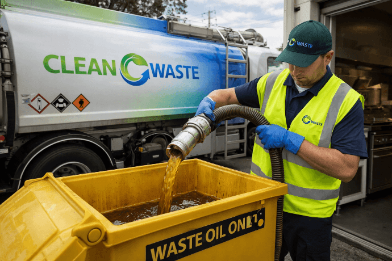
Licensed collection and recycling of used fryer and cooking oil
What Is Used Cooking Oil Collection?
Used cooking oil (UCO) collection is a dedicated service that picks up spent fryer and cooking oil from commercial kitchens in sealed containers or a bulk tank, rather than letting it go down the drain or into general waste. Collected oil is transported to a licensed processor, filtered and refined, and reused as feedstock for biodiesel and other renewable products.
Clean Waste supplies collection containers and a scheduled pick-up across Sydney, alongside your grease trap servicing, general waste and recycling streams under one account — with a free site assessment to confirm the right container size and collection frequency for your kitchen.
Never Pour Used Cooking Oil Down the Drain
Oil poured down sinks or floor drains is one of the leading causes of kitchen blockages and grease trap overload.
Oil down the drain overloads your grease trap and blocks pipes
Cooking oil poured into sinks or floor drains solidifies in the pipework, causing blockages and forcing your grease trap to work harder — often triggering earlier, more expensive pump-outs. A dedicated collection container keeps oil out of your drains entirely, and it's collected free at most sites.
Used Cooking Oil Collection That Actually Gets Recycled
A collection container only works if it's the right size, collected on schedule, and the oil is genuinely reprocessed.
From Fryer to Biodiesel Feedstock
Here's what happens to your used cooking oil after collection.
Free Site Assessment
We review your oil volume and kitchen layout to recommend the right container setup.
Container Delivery
Sealed collection containers are delivered and placed in a convenient spot in your kitchen.
Scheduled Collection
Full containers are collected on schedule and replaced with empty ones on the spot.
Filtering & Refining
Collected oil is filtered to remove food particles and water at a licensed processing facility.
Biodiesel Feedstock
Refined oil is supplied as feedstock for biodiesel and other renewable product manufacturing.
Used Cooking Oil Container & Tank Options
From a 20L drum to a bulk holding tank, sized to your kitchen's actual oil turnover.
What Can & Can't Go in a Used Cooking Oil Container
Keeping the oil clean and correctly stored protects both collection staff and the quality of the recycled feedstock.
✅ Accepted
- Used vegetable, canola, sunflower and blended frying oils
- Used animal fats and dripping from cooking
- Oil cooled to a safe temperature before disposal
- Oil poured into the supplied sealed container only
❌ Not Accepted
- Hot or actively burning oil poured straight from the fryer
- Water, food scraps or cleaning chemicals mixed in
- Motor oil, hydraulic oil or other non-food-grade oils
- Oil poured into general waste or down the drain
How Used Cooking Oil Becomes Biodiesel
Understanding what happens after collection explains why correct storage and clean oil matter.
- Bulking and settling: Collected oil is bulked and left to separate out water and food solids
- Filtration: Oil is filtered to remove remaining particulates
- Quality testing: Free fatty acid content and moisture levels are checked
- Transesterification: Processed oil is converted into biodiesel through a chemical reaction with an alcohol
- Distribution: Finished biodiesel is supplied as a renewable fuel blend component
What Drives Your Used Cooking Oil Collection Cost
Most sites are collected free of charge — rebates may apply for consistent, high-volume oil supply.
Typical cost for scheduled collection at small and standard-volume kitchens across Greater Sydney.
Available for high-volume sites with consistent, clean oil supply — paid per litre or per collection.
Ad-hoc or urgent collections outside the regular schedule may attract a small call-out fee.
Exact terms depend on volume, oil quality and collection frequency. Request a free, no-obligation site assessment and we'll confirm whether your site qualifies for free collection or a rebate.
Used Cooking Oil Collection for Every Kitchen
Any commercial kitchen using a fryer benefits from a dedicated, scheduled oil collection service.
Used Cooking Oil Collection Across Greater Sydney
Consistent, on-schedule collection wherever your kitchen is located.
Used Cooking Oil Collection FAQs
Straight answers to the questions Sydney food businesses ask most before setting up a service.
Is used cooking oil collection free?
Most small and standard-volume kitchens are collected free of charge. High-volume sites with consistent, clean oil supply may qualify for a per-litre or per-collection rebate instead.
What happens to the oil after it's collected?
Collected oil is bulked, settled and filtered to remove water and food solids, then processed into biodiesel feedstock at a licensed facility rather than being landfilled or poured down the drain.
Why shouldn't I pour used oil down the sink?
Oil poured down sinks or floor drains solidifies in the pipework, causing blockages and overloading your grease trap, which can lead to more frequent, more expensive pump-outs.
What size container do I need?
Small cafés typically use a 20L drum, standard restaurants and pubs use 60L–205L drums, and high-volume kitchens may need a 500L–1,000L bulk tank. A free site assessment confirms the right setup for your oil turnover.
How often is used cooking oil collected?
Collection frequency depends on your fryer volume — smaller kitchens are typically collected on an as-needed basis, while busier sites are collected on a regular set schedule.
Can hot oil be poured straight into the collection container?
No. Oil should be allowed to cool to a safe temperature before being poured into the container, for staff safety and container integrity.
Set Up Used Cooking Oil Collection Today
Free site assessment. Right-sized containers. Fully documented, every collection.