FOGO Bin Services for NSW Business Compliance
Source-separated Food Organics & Garden Organics collection, built around the NSW EPA's staged FOGO mandate. Right-sized bins, compliant liners, and a schedule that keeps your business audit-ready — without overflow or odour issues.
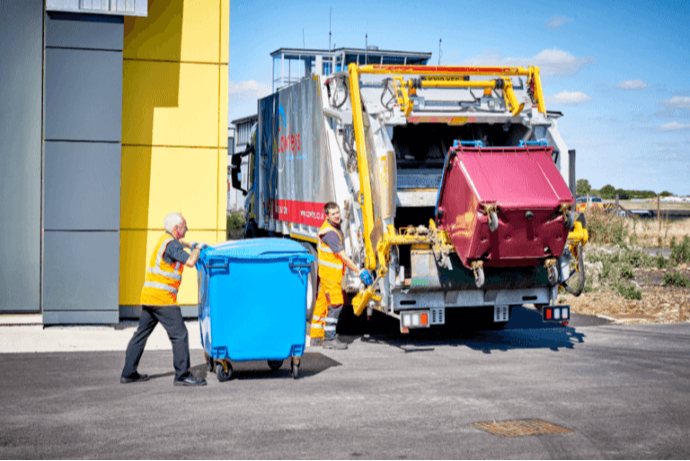
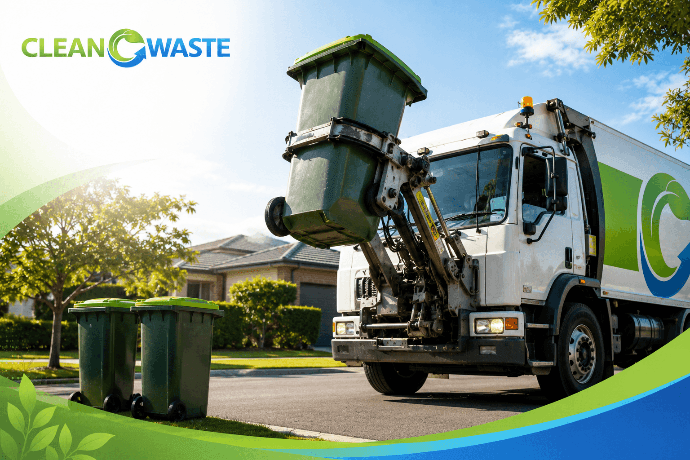
Green-lid FOGO bins keep food organics compliant and out of landfill
What Is a FOGO Bin Service?
A FOGO bin service is a source-separated collection system for Food Organics and Garden Organics — food scraps, food-soiled paper, and garden waste — kept apart from general waste and recycling in a dedicated green-lid bin. Under the NSW Protection of the Environment Legislation Amendment (FOGO Recycling) Act 2025, businesses that prepare, sell or handle food are required to run a source-separated food organics collection, phased in by weekly waste volume from 1 July 2026 through to 1 July 2030.
Clean Waste designs and manages FOGO bin services for supermarkets, hospitality venues, offices, healthcare and education sites across Sydney — with a free compliance assessment to confirm which mandate tier applies to you, and right-sized bins delivered under one account alongside your general waste and recycling streams.
The NSW FOGO Mandate: Do You Need to Comply Now?
The mandate is rolled out in three tiers based on your weekly residual (general waste) bin capacity — not your food organics volume.
Tier 1 is already in effect
As of 1 July 2026, the largest waste generators are legally required to have a source-separated food organics collection in place. If your site fits the Tier 1 threshold below and doesn't yet have a FOGO service, you should treat this as an immediate compliance gap.
| Tier | Weekly Residual Waste Threshold | Compliance Deadline | Status |
|---|---|---|---|
| Tier 1 — Largest generators | ≥6 × 660L bins, ≥16 × 240L bins, or combined ≥3,960L/week | 1 July 2026 | In effect now |
| Tier 2 — Mid-size generators | ≥3 × 660L bins, ≥8 × 240L bins, or combined ≥1,980L/week | 1 July 2028 | Upcoming |
| Tier 3 — Smaller generators | ≥660L single bin, ≥3 × 240L bins, or combined ≥720L/week | 1 July 2030 | Plan ahead |
Thresholds and dates sourced from the NSW EPA's FOGO mandates & rollout guidance. Requirements can be updated by the EPA — confirm your exact obligation with a free compliance assessment, or check epa.nsw.gov.au directly.
FOGO Compliance, Handled End to End
We don't just deliver a green bin — every FOGO service is assessed, sized, and documented against the mandate.
Free Compliance Assessment
We confirm your mandate tier from your current residual bin volume, so you know exactly what's required and by when.
Right-Sized Bins & Schedule
Front-of-house caddies and back-of-house bins sized to your actual food waste output — no overflow, no odour issues.
One Provider, One Invoice
FOGO alongside general waste, recycling and cardboard, consolidated under a single account and monthly invoice.
Fully Licensed & Documented
EPA-licensed operations with consignment notes and waste tracking reports to evidence compliance if audited.
From Enquiry to Compliant Collection in 5 Steps
Here's exactly what happens when you set up a FOGO bin service with Clean Waste.
Compliance Check
Tell us your current bin volumes — we confirm which mandate tier applies to your site.
Free Site Assessment
We review kitchen layout, storage space and front-of-house needs — no obligation.
FOGO Waste Plan
We recommend caddy and bin sizes, liners and collection frequency for your food waste volume.
Bin & Signage Delivery
Colour-coded bins, compliant liners and clear signage delivered ready for day one.
Ongoing Collection
Collections run on schedule with full documentation, and support on call for changes.
FOGO Bin & Caddy Sizes
Most sites run a small front-of-house caddy alongside a larger back-of-house bin — sized to match your kitchen's food waste output.
Compact caddy for prep stations and small kitchens, emptied into a larger bin as needed.
Best for: cafés, small kitchensThe most common back-of-house FOGO bin for small-to-medium food businesses.
Best for: restaurants, small retail foodExtra capacity for mid-volume kitchens and food courts with consistent daily output.
Best for: hotels, food courts, clinicsFor supermarkets, large hospitality venues and institutions with high daily food waste.
Best for: supermarkets, large venuesFor the highest-volume generators — front lifter FOGO bins available where site access allows.
Best for: large supermarkets, institutionsMulti-site businesses can standardise FOGO setups across every location under one account.
Best for: chains, franchises, institutionsWhat Can & Can't Go in a FOGO Bin
Contamination is the most common reason FOGO loads are rejected — correct sorting keeps your service compliant and cost-effective.
✅ Accepted
- Food scraps — raw and cooked, including meat, dairy and bones
- Spoiled or out-of-date food and packaging-free food waste
- Food-soiled paper — napkins, paper towel, pizza boxes
- Garden organics — grass clippings, leaves, small prunings
- Certified compostable liners (AS 4736 / BPI-certified only)
- Coffee grounds and tea bags (check tea bag plastic content)
❌ Not Accepted
- Regular plastic bags or non-certified "biodegradable" liners
- Packaging, plastic wrap, glass, cans or metal cutlery
- Liquids, cooking oil or grease trap waste
- Nappies, sanitary products or personal hygiene items
- Treated timber, large branches or garden chemicals
- General waste or recyclables mixed in with food organics
Front-of-House vs. Back-of-House FOGO Bins
The NSW EPA mandate expects both customer-facing and kitchen-side separation — the two zones need different equipment.
- Front-of-house: Small, clearly signed, colour-coded caddies at self-clear stations, cafés and food courts, designed for customers and staff to sort correctly at a glance
- Back-of-house: Durable, high-capacity bins in prep and wash-up areas, sized for kitchen volume and collected on a frequency that avoids odour and overflow
- Signage: Clear, consistent colour-coded signage at every bin reduces contamination and supports staff training
- Liners: Only AS 4736 or BPI-certified compostable liners should go in FOGO bins — standard plastic bags cause contamination and rejected loads
What Drives Your FOGO Bin Cost
Clear quotes, no hidden fees — and diverting food waste from general waste usually lowers your total bill.
Typical per-lift cost for a 120L FOGO bin in Greater Sydney.
Typical per-lift cost for a 240L–660L FOGO bin in Sydney.
Typical total waste cost saving once food organics are diverted from general waste.
Pricing depends on bin size, frequency, location and food waste volume. Request a free compliance assessment and quote — we'll confirm your exact service cost and mandate tier at the same time.
Industries Affected by the FOGO Mandate
Any business that prepares, sells or handles food is in scope — the compliance date depends only on your weekly waste volume.
FOGO Bin Service Across Greater Sydney
From CBD kitchens to suburban supermarkets — consistent, on-schedule FOGO collection wherever your site is located.
FOGO Bin Service FAQs
Straight answers to the questions Sydney businesses ask most about FOGO compliance and collection.
What does FOGO stand for and what does it cover?
FOGO stands for Food Organics and Garden Organics. It covers food scraps, spoiled produce, food-soiled paper, and garden waste such as grass clippings and small prunings, all collected separately from general waste and recycling in a dedicated green-lid bin.
Is FOGO collection mandatory for my business?
If your business prepares, sells or handles food in NSW, the FOGO mandate applies to you, with the compliance date depending on your weekly residual (general waste) bin volume. The largest generators (roughly 6+ 660L bins, or equivalent, per week) were required to comply from 1 July 2026, with mid-size and smaller generators following in 2028 and 2030.
How do I know which mandate tier applies to my business?
Your tier is based on your current weekly general waste bin capacity, not your food waste volume. As a guide: Tier 1 covers roughly 6+ 660L bins or 3,960L+/week, Tier 2 covers roughly 3+ 660L bins or 1,980L+/week, and Tier 3 covers a single 660L bin, three 240L bins, or 720L+/week. A free compliance assessment will confirm your exact tier.
Can I use regular plastic bags as FOGO bin liners?
No. Only liners certified to AS 4736 or by the Biodegradable Products Institute (BPI) are accepted in FOGO bins. Standard plastic bags, including ones labelled "biodegradable" without certification, are a leading cause of contaminated loads and rejected collections.
What happens if my FOGO bin is contaminated?
Contaminated loads — containing plastics, glass, metal or non-certified liners — may be rejected at the processing facility and redirected to general waste, at extra cost. Clear signage, front-of-house caddies and correctly certified liners are the most effective ways to prevent this.
How much does FOGO bin service cost in Sydney?
Per-lift costs for a 120L FOGO bin typically range from $20–$40 in Greater Sydney, with 240L–660L bins ranging from $40–$75. Because diverting food organics reduces your general waste volume, most businesses see a 15–30% reduction in total waste costs after adding FOGO. Contact us for a free, itemised quote.
Set Up Your FOGO Bin Service Today
Free compliance assessment. Right-sized bins & liners. All waste streams. Sydney-wide coverage. Audit-ready documentation.